How One Guildford Family Tackled Unstable Power Surges & Trimmed Their Monthly Electricity Outgoings
With British households keeping a close eye on smart meter displays this season, Mark and Sarah Henderson decided to test whether stabilising their home's electrical current with a plug-in unit could make a noticeable difference.
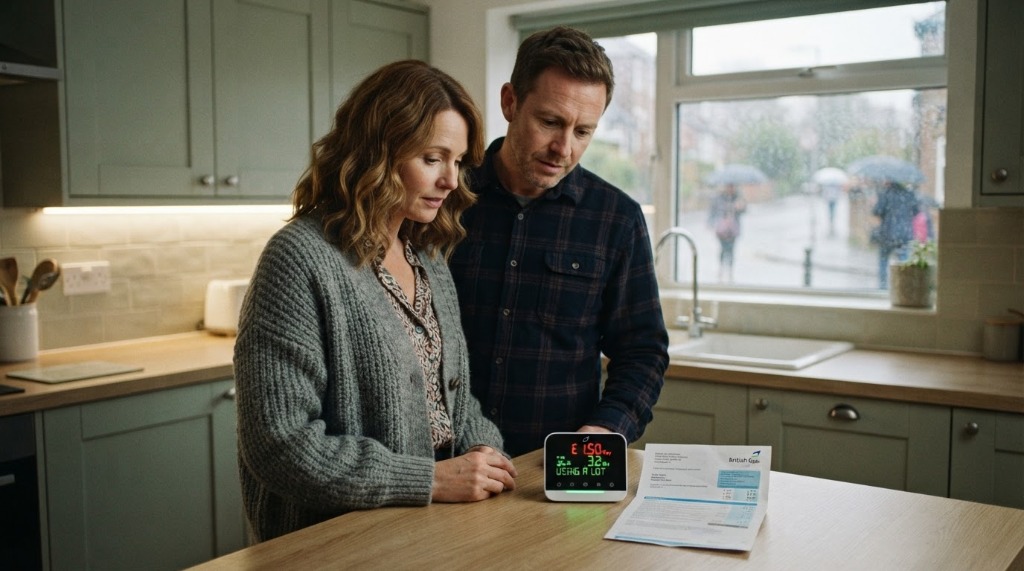
For Mark (44) and Sarah Henderson (41), a semi-detached 1970s property in Guildford, Surrey has been home for twelve years. Like millions of families across the United Kingdom, their kitchen worktop has a permanent resident: the in-home smart meter display.
"Every time the tumble dryer, the kettle, and the immersion heater kicked in during the evening, we watched the usage bar jump into the red," Mark explains. "Waitrose and the weekly shop were one thing, but our monthly direct debit for electricity had climbed to £218 a month. Worse still, whenever the fridge compressor or washing machine cycled on, our hallway LED spotlights would briefly flicker."
The Hidden Culprit: Power Surges & "Dirty" Household Current
When Mark mentioned the flickering lights and high meter readings to his brother-in-law, David—a qualified electrical maintenance engineer working in London—he learned something most homeowners rarely consider.
Modern British homes are packed with inductive loads and switch-mode power supplies: frost-free fridge-freezers, inverter washing machines, dishwashers, gaming PCs, and EV chargers. As these appliances cycle on and off, they create minor voltage spikes, electrical noise (harmonics), and inefficient power factor fluctuations across the ring main.
"Your appliances don't always draw electricity in a smooth, flat line. Inductive motors cause brief micro-surges and reactive current that stress sensitive circuit boards and generate wasted heat in wiring."
— David M., Electrical Maintenance Technician, Greater LondonIntroducing StopWatt: Plug-and-Play Power Conditioning
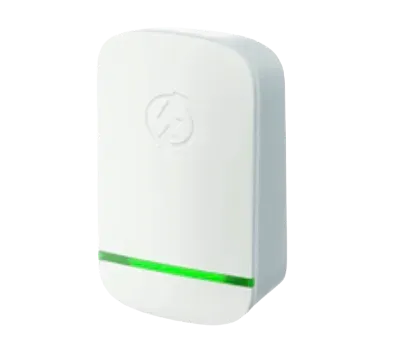
Rather than rewiring their fuse box, David suggested the Hendersons look into a compact plug-in power factor and surge conditioning unit that had recently become available in a 3-pin UK Type-G format: StopWatt Electricity Saver.
StopWatt™ Household Power Stabiliser
Engineered to plug directly into a standard wall socket, StopWatt uses internal capacitor banks and transient voltage surge suppression to smooth out current spikes, support power factor stability, and shield home electronics.
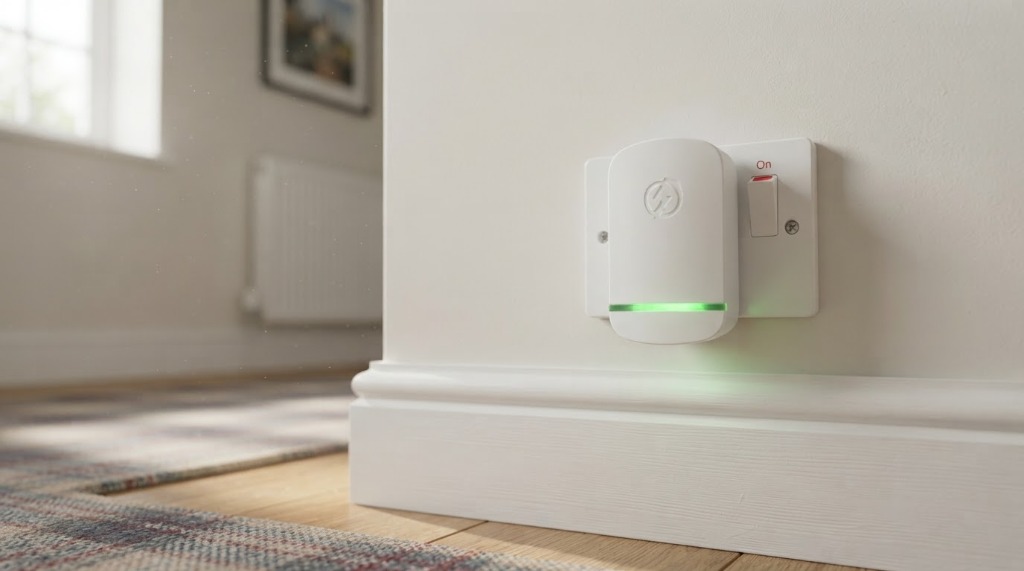
The Hendersons ordered a twin-pack of StopWatt units—plugging one into the hallway socket closest to their consumer unit (fuse board), and the second in the utility room near the fridge-freezer and washing machine. Within seconds, the horizontal green LED bar illuminated, indicating active current conditioning.
The 90-Day Comparison: With StopWatt vs. Without StopWatt
Mark decided to track their smart meter kWh readings and monthly statements across three full billing cycles, comparing their normal household routine before and after installing StopWatt.
Henderson Family 3-Month Electricity Comparison
3-Bedroom Semi-Detached Home • Guildford, Surrey • Standard Variable Tariff- ❌ Frequent Peak Spikes: Sharp wattage jumps whenever heavy kitchen appliances started up.
- ❌ Unfiltered Line Surges: Noticeable LED dimming and buzzing from older appliance transformers.
- ❌ Appliance Wear: Unbuffered voltage fluctuations reaching sensitive TV and boiler PCBs.
- ✅ ~£39/Month Lower Outgoings: Combined with mindful peak-hour usage and stabilised appliance draw.
- ✅ Continuous Surge Protection: Captures sudden voltage spikes before they travel along the ring circuit.
- ✅ Quieter, Cooler Operation: Reduced harmonic noise on inductive motor appliances.
"The first thing we noticed in the very first week was that our kitchen spotlights stopped flickering when the fridge kicked in," Sarah says. "And when we checked our quarterly online statement, our average monthly spend had dropped from £218 down to £179. Over a full year, that puts roughly £460 back into our family budget—plus the peace of mind knowing our £1,200 fridge and combi-boiler electronics are protected against sudden grid surges."

💷 Interactive UK Household Bill Estimator
Move the slider below to match your current monthly UK electricity direct debit and see how an estimated 12%–18% efficiency & habit optimisation compares over 12 months:
Why More British Homeowners Are Installing Surge & Power Conditioners
Whether you live in a compact flat in Manchester, a Victorian terrace in Birmingham, or a detached family house in the Home Counties, installation takes less than 30 seconds:
- Step 1: Plug StopWatt into an active wall socket (ideally near your main consumer unit or high-draw kitchen appliances).
- Step 2: Confirm the bright green LED strip turns on—showing that surge protection and current stabilisation are active.
- Step 3: Leave it running 24/7. For larger 3–4+ bedroom UK homes, two units on separate ring circuits are recommended for full-house coverage.
Ready to Protect Your Home & Optimise Your Power?
Due to high seasonal demand across the UK, the manufacturer is currently offering a multi-unit family bundle discount on the official order page, backed by a 60-day satisfaction guarantee.
Check UK Price & Availability Now → 🔒 Fast UK Tracked Delivery • 60-Day Money-Back Guarantee • Plug-and-Play Setup